
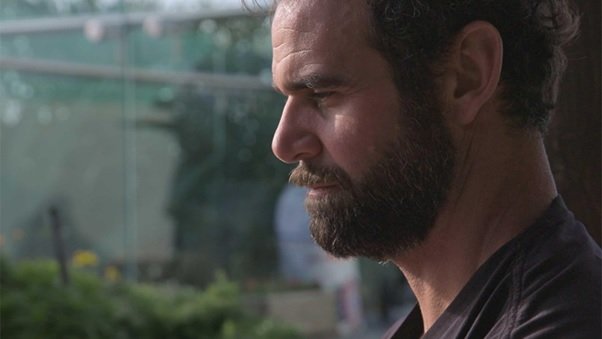
When the documentary “In Waves and War” appeared on Netflix, many people connected to this world felt a familiar tightness in their chest, wondering how this new ibogaine documentary would portray their reality.
It talks openly about injuries that do not show on scans or in photographs. It makes looking beyond the usual system for help feel understandable rather than reckless. And it moves ibogaine from whispered conversations among special forces veterans into the centre of mainstream discussion.
It is raw, emotional and, at times, difficult to sit through. It also does three very helpful things.
Ambio Life Sciences, the clinic featured in the documentary, is at the heart of the story. Ambio has worked closely with Stanford Medicine, contributing to research in Nature Medicine showing meaningful improvements in mood and everyday functioning among veterans with traumatic brain injury who received ibogaine in Mexico.
The film follows former U.S. Navy SEALs living with intense post-traumatic stress, depression and mild traumatic brain injury as they head to a clinic in Mexico for ibogaine treatment. A research team from Stanford accompanies them, tracking what happens next.
At Iboga Root Sanctuary (Ibogaine Treatment UK), we applaud that work. The veterans who took part and the teams who supported them have helped the whole field move forward.
However, films with this much emotional charge often leave viewers with big, unanswered questions:
Is ibogaine a once-and-for-all fix, and is Mexico the only destination? How safe is it really, medically and physically? What if you live with PTSD or mTBI but the idea of travelling into what you see as a conflict zone rife with drug and cartel violence makes your body shut down?
From our vantage point at Iboga Root Sanctuary (Ibogaine Treatment UK), we want to broaden the frame and explain how our approach fits into this wider story.
Life After Service: PTSD, mTBI And The Battle That Continues

One thing “In Waves and War” captures well is the sense that the real battle does not end when deployment stops. Many of the men in the film are living with overlapping injuries.
PTSD can bring intrusive memories, flashbacks, nightmares, numbness and a nervous system that never really stands down. Mild traumatic brain injury can add headaches, cognitive “fuzziness”, dizziness, broken sleep and mood swings.
Among veterans, these two conditions almost never appear in isolation. Research from the U.S. Department of Veterans Affairs points out that symptoms of mild TBI and post- traumatic stress are so entangled that they are frequently mislabelled or missed altogether. A history of head injury also raises the risk of later PTSD and depression.
This means that relying solely on talking therapies is often not enough. Typically, veterans are dealing with a mixture of:
- Injury to the brain itself.
- Psychological and moral injury from what they have seen and done.
- Disrupted sleep and nervous system imbalance.
- Substance use layered on top in an attempt to cope.
In the documentary, one partner explains how her husband went through the Veterans Affairs system: sleep studies, brain imaging, psychological tests, and a drawer full of prescriptions for energy, nightmares, depression and anxiety. He followed every recommendation, and yet felt worse.
Later we hear him describe his ibogaine journey. He talks about a rapid stream of images from childhood and service, as if someone were shuffling thousands of photos in front of him. From that angle he suddenly understands that many events he had carried as personal failure were not his fault. The sense of burden lifts and he describes feeling as if his brain has been reorganised, the defensive “armour” stripped away, and something softer and more loving revealed underneath.
Another veteran describes long-standing hypervigilance and a twelve-year headache resolving after ibogaine, saying it felt as if his brain were growing back into itself. A third reflects that the medicine helped him see how childhood fear had driven him to become someone dangerous, so that he would never again feel like a victim. He realises he has often feared life more than death.
Stories like these show why ibogaine for traumatic brain injury and PTSD is attracting serious attention. It seems to touch both the brain and the story at the same time.
Research, Protocols And The Allure Of A Reset
“In Waves and War” is part of a much larger wave of interest in ibogaine.
Stanford Medicine has reported that ibogaine-assisted therapy under intensive medical supervision led to significant improvements in depression, anxiety and functioning among special operations veterans with traumatic brain injury. Ambio Life Sciences has played a key role in bringing ibogaine into a more medical, protocol-driven context.
When you combine solid research with moving personal stories, the pull is strong. Across the community, many of us are no longer arguing about whether ibogaine can help some people. The more pressing questions are how to offer it safely and in a way that includes the whole person.
At Iboga Root Sanctuary (Ibogaine Treatment UK), we respect the work Ambio and others have done in building clinical structures and research partnerships. Our approach is different, though not in opposition. We focus on smaller groups, quieter surroundings and a strong emphasis on preparation and integration.
What A Ninety-Minute Film Cannot Capture

Any documentary must simplify to fit a running time. “In Waves and War” leans into a narrative of dramatic change, with less space for the quieter, slower work that surrounds a flood dose.
Off camera, there is usually:
- A period of medical and psychological preparation that can last months for trauma- informed work.
- A long-term integration process, rebuilding trust, identity and daily rhythms after a big “reset”.
- Ongoing attention to sleep, food, movement and other nervous-system supports, particularly important for people with mTBI.
- The possibility that some people may not experience a dramatic shift after a single dose and may need further support.
These are often the areas where different centres diverge most.
It is not just about the medicine. It is about the context you are held in, whether that is a trauma-informed ibogaine clinic or a more traditional service.
The Mexico Question From A UK Perspective
The men in the film travel to Mexico because ibogaine is illegal in the United States.
For some potential guests, the idea of going to Mexico is manageable. For others, the combination of news stories about cartels, unfamiliar surroundings and border security is simply too much.
The U.S. State Department currently advises heightened caution for Mexico due to crime, with some regions under stronger warnings linked to kidnapping and cartel activity. Media outlets have covered incidents where U.S. citizens were caught up in violence near the border. Social media has circulated photos of supposed cartel “banners” warning Americans away from certain resort areas, although these reports are contested.
This does not mean Mexico is uniformly dangerous, nor that serious clinics like Ambio are reckless. They put a great deal of effort into safety.
However, if you already live with PTSD, the perception of threat can trigger your nervous system as powerfully as an actual threat. For some veterans and first responders, the thought of long-haul flights, armed checkpoints and heavily policed borders is enough to shut everything down.
From the UK, distance and time zones can make Mexico feel even further away. This is one reason why some people start to look for alternatives closer to home.
A Quieter Option: Iboga Root Sanctuary (Ibogaine Treatment UK)

Although “In Waves and War” focuses on Mexico, it is not the only doorway into ibogaine work. There are European routes, and UK-based support, too.
Iboga Root Sanctuary is a UK-based centre working closely with a partner clinic in Portugal. Our focus includes:
- Supporting people with PTSD, complex trauma and addiction.
- Designing pathways that take mild traumatic brain injury seriously rather than treating it as an afterthought.
- Offering a setting that feels more familiar to UK and European guests, with access to rural Portugal rather than areas associated with cartel activity.
Our model emphasises intimacy and relationship over high throughput. Instead of large groups, we work with smaller cohorts, so staff can really get to know each guest. Ibogaine sessions take place in private rooms rather than shared wards, allowing those with mTBI to control light, sound and movement.
We build nervous-system-oriented supports into the programme: sleep hygiene, nutrition, body-based work, breath and somatic practices alongside the medicine. Preparation and integration unfold over time with trauma-informed practitioners, not just in a quick conversation at either end of dosing.
Because we are not locked into a single clinical research protocol, we can adapt around the individual, taking into account their medical risks, their personal story, their family reality and the future they want to move towards.
For us at Iboga Root Sanctuary, ibogaine is an important tool, but never the whole story.
Different Centres, Different Fits
Social media loves simple comparisons: “Which clinic is best?” “Who has the superior protocol?”
Real life is more nuanced.
Ambio has been a pioneer in bringing ibogaine into a structured, research-linked, physician-led setting for special operations veterans.
Iboga Root Sanctuary (Ibogaine Treatment UK) has focused on building a smaller, more relational and holistic Europe-based pathway for veterans, first responders and civilians dealing with PTSD, mTBI and addiction.
Some people will feel drawn towards a high-profile Mexican clinic tied to U.S. institutions like Ambio. Others will feel safer in a quieter, more discreet European environment where they can step away from their public identity, receive one-to-one care, and integrate by walking in the Portuguese countryside rather than navigating armed border posts.
What matters is not which clinic “wins”, but which environment, ethos and level of support fit you.
What to Consider When Choosing an Ibogaine Clinic
If “In Waves and War” has stirred something in you or someone close to you, it helps to move from emotion to practical questions. Any ibogaine clinic you consider, including Iboga Root Sanctuary, should be able to explain how they screen for mild traumatic brain injury and other medical risks, what heart monitoring and emergency measures they use, who will be with you during your session and how many guests each clinician is responsible for.
It is also reasonable to ask whether you will have a private room, how they manage light and noise for people with mTBI, what integration and aftercare are offered once you are home, and how they describe the local security situation and travel from the nearest airport. A trustworthy provider will answer all of this clearly, calmly and in writing if you request it.
If The Film Felt Like Looking In A Mirror

If you watched “In Waves and War” and felt that horrible recognition – the shutdown, the outbursts, the exhaustion, the nagging sense that your brain has not been the same since an impact – please hold on to two truths.
You are not making it up. The interplay between PTSD and mild traumatic brain injury in veterans is real, and more clinicians and researchers are paying attention to it.
Ibogaine therapy for PTSD is an exciting, emerging option, but it is not the only lifeline. Evidence-based trauma therapies, intensive programmes and other modalities can also help people reclaim their lives.
If and when you feel ready, contact our team at Iboga Root Sanctuary (Ibogaine Treatment UK) and other trauma-informed services. The aim is not to copy anyone else’s path, but to find a route that fits your body, your history and your life.
“In Waves and War” has opened a door into a difficult, important conversation. Our hope is that you walk through it with care, support and your own safety at the centre.